



All You Need to Know About the RYA Radar Course
The RYA Radar Course is designed to give you the knowledge and confidence to use radar effectively for navigation and collision avoidance.
Radar is a powerful navigational aid found on many modern vessels. Under the International Regulations for Preventing Collisions at Sea (IRPCS), if radar is fitted and operational, you are expected to make proper use of it. That means understanding how to set it up correctly and interpret what it is showing you.

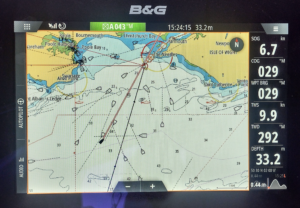
Why Radar Still Matters in the Age of Chartplotters
With modern chartplotters, AIS, and high-accuracy GNSS, it is easy to assume radar is no longer essential. That is not the case.
Radar provides something electronic charts cannot: real-time detection of actual objects around your vessel.
- It detects vessels that may not transmit AIS.
- It shows land, buoys, and structures regardless of chart accuracy.
- It continues to function in fog, darkness, and heavy rain.
- It operates independently of satellite positioning.
- Charts show what should be there. Radar shows what actually is there.
For that reason alone, radar remains one of the most important tools for safe navigation.
What Does the RYA Radar Course Entail?
The RYA Radar Course teaches you how to operate radar correctly and use it to make sound navigational decisions.
Radar offers enormous flexibility when navigating in poor visibility or busy waters. However, it does not “see” everything, and it can easily be misinterpreted. Knowing its functions, controls, limitations, and common errors is essential.
By the end of the course, you should be able to:
- Set up and tune radar correctly
- Interpret targets and returns
- Use radar for collision avoidance
- Use radar for pilotage and position fixing
- Understand radar’s limitations and errors
Who Can Take the RYA Radar Course?
The RYA Radar Course is open to anyone. There are no age restrictions and no formal prerequisites.
It is suitable for:
- Leisure sailors and motor cruisers
- Yachtmaster candidates
- Professional skippers
- Anyone navigating in areas of restricted visibility
What Should You Know Before Attending?
There are no mandatory prerequisites. However, prior knowledge of basic navigation is helpful.
If you have not completed an RYA theory course before, the RYA Essential Navigation and Seamanship or RYA Day Skipper Theory course will complement this training well.
A working understanding of bearings, relative motion, and chartwork will make radar plotting exercises much easier.
Is the Course Classroom-Based or Afloat?
The course is usually delivered in a classroom using radar simulators. In some cases, it may be delivered afloat on a vessel fitted with radar.
Both formats have advantages.
Classroom delivery allows:
- Structured scenarios
- Controlled conditions
- Multiple exercises in a short period
- Multiple simulators side-by-side
- No distractions
Afloat delivery allows:
- Real-world targets
- Live interpretation
- Real setup and tuning
The best option depends on your learning preference.
How Long Does the Course Take?
The RYA Radar Course is a one-day course.
It includes theory sessions, practical radar plotting exercises, and scenario-based collision avoidance practice. It is hands-on rather than purely lecture-based.
What Is Included in the Syllabus?
The RYA Radar syllabus includes:
- Radar wave propagation
- Radar set components
- Target definition and discrimination
- Radar reflectors
- Types of radar display
- Radar plotting
- Use of radar for navigation
- Range and bearing measurement
- Limitations and errors
The aim is that by the end of the course you can confidently integrate radar into your overall navigation strategy.

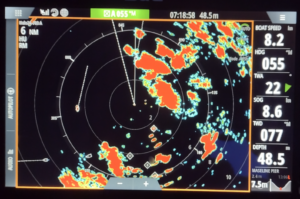
The Link to IRPCS Rule 7
Radar use is not just good practice. It is directly referenced in the Collision Regulations.
Rule 7, Risk of Collision, states that proper use shall be made of radar equipment if fitted and operational, including long-range scanning and radar plotting.
This means:
- You must not ignore radar if it is available.
- You should understand how to interpret what it shows.
- You must use it correctly to assess risk of collision.
The course gives you the tools to comply with this requirement properly.
Common Misconceptions About Radar
There are a few misunderstandings that regularly catch people out.
“Radar shows everything clearly.”
In reality, radar can miss small targets, poorly reflective objects, or vessels hidden in sea clutter.
“If I have AIS, I don’t need radar.”
AIS only shows transmitting vessels. Radar detects everything that reflects a radar pulse, whether transmitting or not.
“MARPA will solve collision avoidance for me.”
MARPA is helpful, but it depends on correct setup, stable heading data, and good interpretation. It supports decision-making; it does not replace it.
Understanding these limitations is a key part of becoming competent with radar.
Who Really Needs Radar Training?
Radar training becomes especially valuable if you:
- Cross busy shipping lanes
- Sail in areas prone to fog
- Navigate at night
- Cruise in high-latitude or remote regions
- Operate in waters with heavy fishing traffic
Even coastal cruising in the UK or northern Europe can quickly present restricted visibility. Having radar is reassuring. Knowing how to use it properly is what makes it effective.
What Is the Format of the Course?
The instructor guides you through structured exercises, gradually increasing complexity.
You will:
- Tune radar controls
- Identify targets
- Measure range and bearing
- Complete plotting exercises
- Work through collision avoidance scenarios
Regular feedback ensures you understand both the technical process and the reasoning behind safe decisions.
How Much Does the RYA Radar Course Cost?
Prices vary between training centres.
When comparing providers, consider:
- Class size
- Access to individual radar simulators
- Instructor experience
- Hands-on time
- Whether materials are included
The cheapest option is not always the best. Radar is a practical skill, so meaningful time using the equipment is important.
Is There a Pass Mark?
There is no formal written exam or fixed pass mark.
The instructor’s goal is to ensure you reach a competent standard in:
- Setting up radar correctly
- Interpreting returns
- Making safe collision avoidance decisions
If you engage fully with the course, you should leave confident in using radar as a navigational tool.
What Comes After the RYA Radar Course?
The best next step is practice.
Radar is not a skill that stays sharp without use. After completing the course:
- Use radar regularly, even in clear visibility
- Compare radar returns with visual observations
- Practise plotting targets
- Integrate radar into passage planning
For those working towards Yachtmaster Offshore or Ocean, sail or power, radar knowledge is expected.
Another strong complementary qualification is the RYA VHF SRC course, as radar and VHF are often used together when managing close-quarters situations.


