RYA SRC / VHF Radio Licence: Who Needs It and How the Exam Works
RYA SRC / VHF Radio Licence: Who Needs It and How the Exam Works
A VHF radio is one of those bits of kit we use almost every day afloat.
Most of the time, we might use it for a radio check, calling a marina, speaking to harbour control, or listening out for useful safety information. Nice and routine.
But if things go wrong, that same radio could become the quickest way to get help. We can speak to the Coastguard, alert nearby vessels, and, with DSC, send a digital distress alert from the set itself.
So, if we have a VHF radio on board, we need to know how to use it properly. We also need the right certificate.
That certificate is the RYA Marine Radio Short Range Certificate, usually called the SRC. It is the minimum qualification required to operate marine VHF and VHF DSC equipment on a UK or British-flagged vessel with a radio. That includes both fixed and handheld equipment.
Let’s go through what the SRC is, who needs one, what the course covers, and how the exam works.
What is the RYA SRC?
The SRC is the standard operator certificate for using marine VHF radio equipment.
Basically, it shows that we know how to use the radio without causing confusion, blocking important channels, or making a mess of a distress call when the pressure is on.
A marine VHF radio sits inside a wider safety system. It is not like phoning a friend, where we can ramble a bit and sort it out as we go. Radio calls have a structure, and that structure is there for a reason.
If we make a Mayday call, everyone listening needs to understand instantly that life is in danger.
If we make a Pan Pan call, they need to know it is urgent, but not yet a Mayday.
If we make a Sécurité call, they need to know we are passing safety information, like a hazard or navigational warning.
The SRC teaches us how to do all of that calmly and correctly.
It also covers DSC, which stands for Digital Selective Calling. On a modern fixed VHF radio, DSC lets us send a digital alert containing key information, such as the vessel’s identity and, if the set is correctly linked to a position source, the vessel’s position.
That is pretty powerful. But, like anything powerful, we need to know how to use it properly.
The SRC and the Ship Radio Licence are different things
This is one of the bits people mix up most often, so it is worth slowing down here.
There are two sides to radio licensing.
The SRC covers the person using the radio.
The Ship Radio Licence covers the radio equipment on the vessel.
So if we have a fixed VHF on board, the boat needs the correct equipment licence. If we are the person controlling the radio, we need the operator certificate.
A good way to think of it is this:
| Requirement | What it covers | Issued by |
|---|---|---|
| RYA SRC | The person controlling the VHF radio | RYA, through an RYA Recognised Training Centre |
| Ship Radio Licence | Radio equipment fitted or carried on a specific vessel | Ofcom |
| Ship Portable Radio Licence | Certain portable radio equipment used between boats in UK territorial waters | Ofcom |
The Ship Radio Licence is specific to a vessel, and the licence must show what maritime radio transmitting equipment is carried on board. It also explains that radio equipment must be operated by, or under the direct supervision of, someone holding the relevant maritime radio operator’s certificate.
So, we need both parts sorted.
The radio needs to be licensed.
The person controlling it needs to be qualified.
Who needs an SRC?
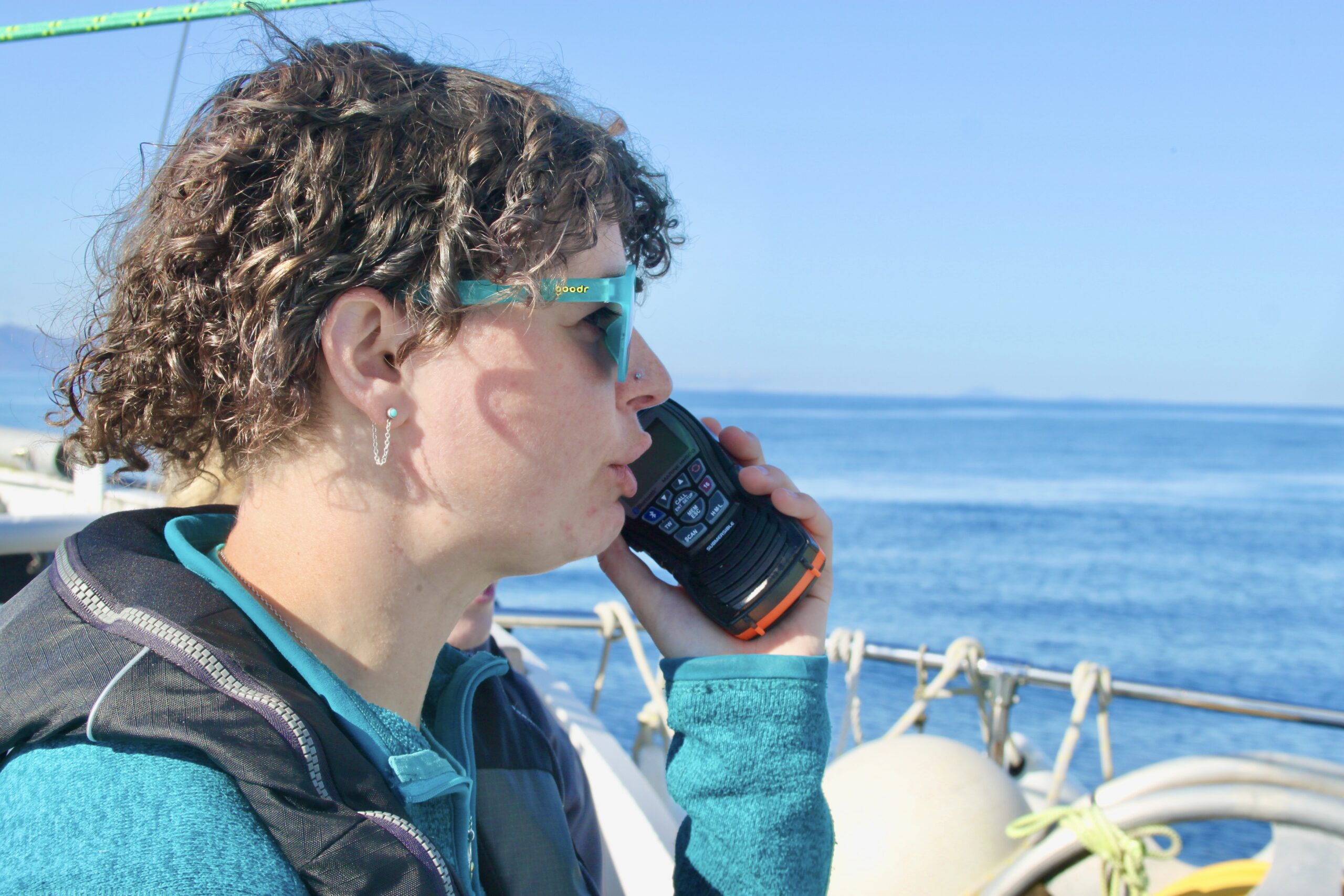
If we have a VHF radio on board, or we carry a handheld VHF while kayaking, paddleboarding, sailing, or motor boating, we need to hold an operator’s licence. It is the qualification for using fixed or handheld marine VHF radio equipment.
That means the SRC is relevant for:
- Skippers
- Boat owners
- Charter skippers
- Day Skipper students
- Yachtmaster candidates
- Regular crew who stand watches
- Anyone likely to use the radio in an emergency
- Kayakers, paddleboarders, and small craft users carrying a handheld VHF
There is a small but important detail here.
A crew member can use the radio under the direct supervision of someone with the right operator certificate. So, if the skipper holds the SRC and is supervising the call, that is different from a crew member independently controlling the radio.
But from a practical point of view, if we might need to use the radio when the skipper is busy, injured, asleep, or dealing with something else, getting the SRC is a very sensible move.
Emergencies rarely line themselves up neatly around who has the paperwork.
Do we need an SRC for a handheld VHF?
Yes.
A handheld VHF is still a marine VHF radio. It might be smaller, cheaper, and easier to chuck in a grab bag, but it is still transmitting on marine radio channels. So the operator certificate requirement still applies.
The equipment licence depends on how the handheld is being used.
If the handheld belongs to one boat and stays with that boat, it can usually be listed on that boat’s Ship Radio Licence.
If it is genuinely portable and used between different boats in UK waters, it may need a Ship Portable Radio Licence.
Unfortunately, the portable licence has a limitation people sometimes miss. A UK Ship Portable Radio Licence is for use within UK territorial waters. If we are taking a handheld VHF abroad, we need to check the rules before we go.
So, the short version is:
If we are controlling a handheld VHF, we need the SRC.
If the handheld transmits, it also needs to be covered by the right equipment licence.
Is a VHF radio compulsory on a pleasure vessel?
For many UK pleasure vessels, carrying a VHF radio is not automatically compulsory.
But if we do carry one, it must be licensed, and the person controlling it needs the correct operator certificate.
That distinction is pretty important. We are not necessarily forced to fit a VHF radio to every pleasure vessel, but once we have one on board, we need to treat it properly.
And, from a seamanship point of view, a VHF is still one of the most useful safety tools we can carry.
A mobile phone can be helpful close to shore, but it does not do the same job. A VHF lets us speak to the Coastguard, harbour authorities, marinas, and nearby vessels. In an emergency, nearby boats can hear the call too, and many a time they will be the closest people able to help.
Can we use the SRC abroad?
The SRC is widely used by UK boaters, at home and abroad, but we need to be a touch careful with the wording here.
The SRC follows the relevant CEPT examination procedures for non-SOLAS vessels and that CEPT recommends mutual recognition where certificates have been issued in line with ITU Radio Regulations. However, the UK Authority to Operate restricts the validity of the certificate to UK vessels.
So, practically speaking:
If we are using the radio on a UK-flagged vessel, the RYA SRC is normally the certificate we are looking for.
If we are chartering abroad, sailing on a foreign-flagged boat, or entering another country’s waters, we should check the local requirements before departure.
Charter companies may also have their own paperwork requirements, so it is always worth checking before we arrive at the base with bags, passports, and children already asking where the pool is.
What do we learn on the SRC course?
The SRC course is short, practical, and very focused.
The content includes radio operation, frequencies, distress procedures, emergency and medical assistance procedures, ship-to-shore telephone calls, DSC, and the Global Maritime Distress and Safety System.
Let’s put that into normal boating language.
We learn how to use the radio properly
This includes switching on, selecting channels, adjusting volume and squelch, making calls, changing to a working channel, and keeping the distress channels clear.
It sounds simple enough when everything is calm, but the point is to build the habit before we need it.
If we are making a call in a busy harbour, poor procedure causes annoyance.
If we are making a call in an emergency, poor procedure can cost time.
We learn the difference between Mayday, Pan Pan, and Sécurité
These three calls are used for different levels of seriousness.
Mayday is for grave and imminent danger, where immediate assistance is required.
Pan Pan is for an urgent situation that is not immediately life-threatening.
Sécurité is for safety information.
The course teaches us when to use each one and what to say. That is the bit we really want drilled in, because under pressure our brain has a nasty habit of throwing useful information overboard.
We learn how DSC works
DSC is the digital side of modern VHF radio.
If we press and hold the distress button, the radio can send a digital alert. That alert can include the vessel’s MMSI number and, if the radio is properly connected, the vessel’s position.
That is brilliant when used correctly.
It is also why we need to understand false alerts, cancellations, and the correct follow-up voice procedure. Pressing the red button is not the end of the process. It is the beginning of a distress communication.
We learn routine radio use
A lot of radio work is not dramatic.
It is calling a marina.
It is asking harbour control for permission to enter.
It is making a radio check.
It is speaking clearly to another vessel without tying up channel 16 for longer than we need to.
These everyday skills are worth doing well. They make us sound calmer, they make life easier for everyone listening, and they stop the radio feeling intimidating.
We learn where VHF fits into the wider safety system
The SRC also introduces GMDSS, the Global Maritime Distress and Safety System.
We do not need to become radio engineers. Don’t worry. But it helps to understand that our small boat VHF is part of a much bigger system designed to get distress and safety information to the right people quickly.
How long does the SRC course take?
The SRC course is 10 hours plus exam time. The course can be completed online or in a classroom. The minimum age for the exam is 16.
That makes it a pretty manageable course.
It also works really well alongside Day Skipper Theory. In Day Skipper Theory, we cover radio procedures as part of the wider safety and navigation picture. But Day Skipper Theory does not give us the radio operator certificate.
So if we are working towards Day Skipper, buying a boat, booking a charter, or starting to take on more responsibility on board, the SRC is a natural next step.
Can we do the SRC course online?
Yes, the theory course can be completed online through an RYA Recognised Training Centre.
The RYA online SRC course is designed for PC, Mac, or tablet, though it can be advisable to check compatibility before buying the course.
The exam is different.
To get the certificate, we need to complete a face-to-face assessment.
So we can study the theory online, but we cannot complete the whole qualification from the sofa.
A cup of tea on the sofa for the theory? Absolutely.
Final assessment from the sofa? Afraid not.
How does the SRC exam work?
The SRC exam is completed at an RYA Recognised Training Centre.
It includes a written theory paper and a practical assessment using marine VHF radios. The SRC is obtained by successfully completing this exam at an RYA Recognised Training Centre.
The practical test checks that we can actually use the equipment and follow the procedures. That means simulated calls, DSC operation, and scenarios where we need to decide what kind of call is appropriate.
The written paper checks the theory behind it.
The RYA’s exam application form describes the exam as a practical and written test covering radiotelephone voice procedures, operation of a Class D DSC controller, and the regulations governing VHF marine band radiotelephone use within GMDSS, with particular emphasis on distress and urgency procedures.
In plain English, we need to know what to say, when to say it, which buttons to press, and why the procedure is done that way.
At present, the SRC exam fee is £76 and is payable to the RYA. Fees can change, so it is worth checking before booking.
What should we bring to the SRC exam?
Before the exam, we should check the current RYA and training centre requirements, but normally we need:
- Evidence that we are eligible to sit the exam
- The completed exam application/payment paperwork
- A passport-sized photo
- Any documents requested by the exam centre
For most candidates, the eligibility evidence will be proof that we have completed an RYA SRC course through an RYA Recognised Training Centre.
It is worth checking this before the day. Nobody wants to turn up ready to do the exam and then find the missing thing is a bit of paper sitting on the printer at home.
How does the SRC fit with Day Skipper Theory?
The SRC and Day Skipper Theory fit together really nicely.
Day Skipper Theory teaches the wider skippering picture: navigation, tides, pilotage, weather, safety, passage planning, and the general decision-making that helps us run a boat well.
Radio procedure appears within that world, but Day Skipper Theory does not give us the operator certificate.
The SRC is the separate radio qualification.
So, if we are doing Day Skipper Theory and starting to think seriously about skippering, chartering, or owning a boat, it is a good time to get the SRC done as well.
It is one of those jobs that is much easier to sort before we need it.
Does the SRC expire?
The RYA SRC does not have a routine expiry date in the way some other qualifications do.
That said, if we passed years ago and have barely touched a radio since, it is worth refreshing our knowledge. Procedures, equipment, and confidence all get rusty.
A quick refresh before a big trip is time well spent, especially around DSC distress alerts, false alert cancellations, and the exact wording for Mayday and Pan Pan calls.
What if we already have an older VHF certificate?
Some older pre-GMDSS radio certificates may still be valid for older non-DSC equipment.
But modern VHF sets usually include DSC, and older pre-GMDSS certificates must be upgraded if we want to use GMDSS maritime radio equipment.
So if we have an older certificate tucked away in a drawer, it is worth checking exactly what it covers before assuming we are sorted.
What is the difference between SRC and LRC?
The SRC covers VHF and VHF DSC.
The Long Range Certificate, or LRC, covers longer-range systems such as MF, HF, and satellite communications. The LRC is required if a pleasure vessel is equipped with MF, HF, and/or satellite communications equipment.
For most coastal sailing, cross-Channel sailing, club cruising, and charter holidays, the SRC is the relevant qualification.
The LRC becomes relevant when the boat carries longer-range communication equipment, which is more common once we start thinking about serious offshore or ocean passages.
What should we do once we have passed?
Once we have passed the SRC, the next job is to make sure the boat’s radio licensing is also in order.
That means checking the Ship Radio Licence, making sure the listed equipment is correct, and making sure details like the MMSI number are properly programmed into the radio where applicable.
Then we should actually use the radio.
Make the radio check.
Call the marina.
Listen to the Coastguard broadcast.
Practise the calm, normal, everyday calls, because that is how the radio becomes familiar.
We do not want the first serious call we ever make to be the moment when something has gone wrong.
Ready to get your SRC?
The SRC is one of the most useful short courses we can do as boaters.
It gives us the legal operator certificate for marine VHF radio, but more importantly, it gives us the confidence to use the radio properly.
We learn how to make routine calls, how to use DSC, how to call for help, and how to avoid getting in the way of other radio traffic.
If we are working towards Day Skipper, buying a boat, booking a charter, carrying a handheld VHF, or starting to take more responsibility on board, the SRC is a very sensible next step.
At Ardent, we teach the SRC theory online in a clear, practical way, with instructor support available if anything gets confusing.
So, if this is one of those jobs that has been sitting on the boating to-do list for a while, now is a good time to get it ticked off.
Start the RYA SRC online course
Need help arranging the exam? Speak to an instructor