RYA Advanced Powerboat Course: Everything You Need to Know
The RYA Advanced Powerboat course is designed for experienced powerboat drivers who want to operate safely and confidently in coastal waters by day and night, including in more challenging weather conditions.
This is the highest level practical powerboat course offered by the RYA and focuses on advanced boat handling, navigation, pilotage, and decision-making as skipper.
| Type | Practical |
| Duration | 2 Days |
| Minimum Age | 17 |
| Experience Required |
RYA Intermediate Powerboat certificate Navigation and chartwork knowledge to RYA Coastal Skipper and Yachtmaster Theory standard (theory course strongly recommended) |
What Does the RYA Advanced Powerboat Course Allow You to Do?
By the end of the course, you should be able to:
- Plan and execute coastal passages by day and night
- Handle a powerboat at planing speeds in demanding conditions
- Navigate safely using charts, pilotage, and electronic aids
- Take responsibility as skipper for vessel, crew, and passage planning
What Is the Difference Between Intermediate and Advanced Powerboat?
This is a very common question.
The RYA Intermediate Powerboat course focuses on operating a powerboat confidently in familiar waters, primarily by day and in moderate conditions. It’s about building solid boat handling skills and good seamanship.
The RYA Advanced Powerboat course takes things a step further. It introduces coastal passage planning, operating at planing speed in more demanding conditions, and crucially, night navigation and pilotage. There’s also a much greater emphasis on responsibility as skipper.
In simple terms, Intermediate is about competence and confidence. Advanced is about command, judgement, and operating safely when conditions or visibility are less forgiving.
Who Can Do an RYA Advanced Powerboat Course?
The RYA Advanced Powerboat course is open to anyone who meets the basic minimum criteria.
- 17 years of age or older
- Competent in the skills learned on the RYA Intermediate Powerboat course
- Navigation and Chartwork to the RYA Coastal Skipper and Yachtmaster theory
If you are new to powerboating, you should start with:
- RYA Level 1 Powerboat (introduction)
- RYA Level 2 Powerboat (foundation and minimum requirement for many hire companies)
- RYA Intermediate Powerboat (bridge to Advanced level)
What Do You Need to Know Before an RYA Advanced Powerboat Course?
As stated, the prerequisites include knowledge from the RYA Coastal Skipper and Yachtmaster theory course and the RYA Intermediate Powerboat Course.
A suitable first aid certificate and an SRC VHF ticket are also strongly recommended.
While the pre-requisite is only knowledge from the Coastal Skipper and Yachtmaster Theory, and you don’t actually have to complete the course itself, most candidates take the theory course before their Advanced Powerboat course even if they think they have the skills, just to refresh navigation, tides, and meteorology.
What Is the Format of the RYA Advanced Powerboat Course?
The RYA Advanced Powerboat course predominantly takes place afloat. However, some of the learning elements, such as navigation, will take place in the classroom.
The instructor will guide you through the course, setting clear learning objectives and giving continuous feedback as you progress.
Is There a Set Syllabus?
Yes, the syllabus includes:
- Preparation for sea
- Boat handling
- Passage making and responsibility as skipper
- Pilotage
- Meteorology
- Rules of the road
- Use of engines
- Emergency situations
- Night cruising.
What Type of Vessel Is the Course Delivered On?
The vessel should be a powerboat of 6m or greater in length and capable of conducting coastal passages in planning conditions at a sufficient speed.
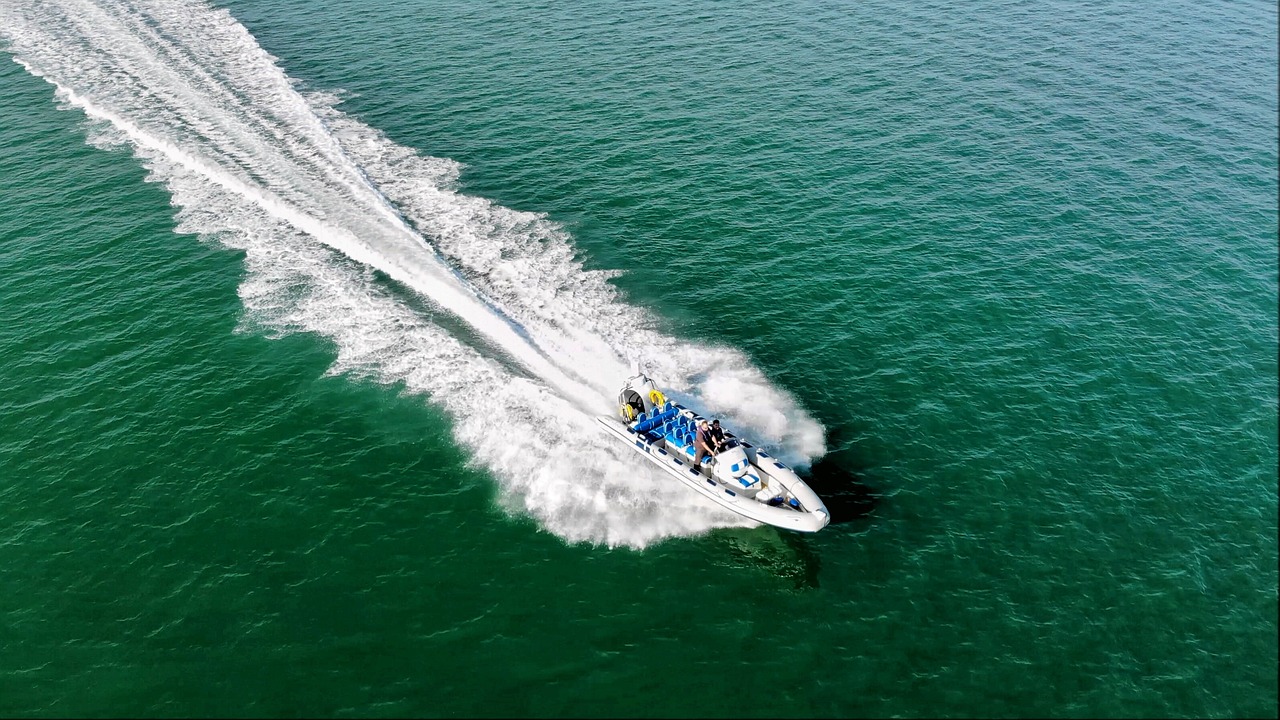
In practice, this is usually a RIB capable of sustained planing speeds and safe offshore operation. The exact type of vessel will depend on the training centre and local conditions.
How Long Does an RYA Advanced Powerboat Course Take?
The RYA Advanced Powerboat course should be done over a minimum time period of 2 days and include at least 1 night exercise.
The night exercise is a core part of the course and focuses on pilotage, lookout, collision avoidance, and operating safely with limited visual cues.
What Is the Cost of a Course?
As ever, many schools differ in price. We would recommend that you take a look around at the various options and find what suits your needs the best. Cheapest is not often better.
This can range from knowing if you will have to pay for food, fuel and extra berthing charges to how many other students you will be sharing your course with.
Always check what is included in the price and whether fuel, food, berthing, and exam fees are included or charged separately.
Where Should I Do My RYA Advanced Powerboat Course?
There are many thoughts on where is best, but to be truthful, it is what works best for you.
One thought is to do it in an area that you plan to powerboat in the future, but do not know that well. That way, any specific learnings you take on your RYA Advanced Powerboat course will be incredibly valuable to your future powerboating.
Also, coastal tidal waters vary significantly around the UK, and training in strong tidal areas adds valuable real-world experience.
Another is to consider those factors above, such as fuel, food and students. Fewer students is not always better; 3 would be a great number.
Can I Take the Course Abroad?
Yes, you can take the RYA Advanced Powerboat course either in the UK or abroad, as long as it’s with an RYA-recognised training centre.
Wherever you choose to train, the location needs to allow for coastal navigation and a proper night exercise, as these are core elements of the course.
Some people choose to take the course in the area where they plan to operate their boat most often, which can make the training especially relevant. Others prefer a new area to gain experience navigating unfamiliar waters. Both approaches work well.
What Is the Pass Mark for the Course?
There is no specific pass mark as such. The aim of the instructor is to bring you up to a level where you can plan and execute coastal trips by night, including entering and leaving a familiar port.
The instructor for your course will guide and personalise any learning to improve your knowledge and skills as much as possible.
The course is continuously assessed rather than examined, and there is no written exam. Your instructor will only issue the certificate once you are operating safely and consistently to the required standard.
Is There an Exam?
There is no written exam as part of the RYA Advanced Powerboat course itself.
The course is continuously assessed by your instructor over the two days, both during daylight and night exercises. The focus is on practical ability, decision-making, and safe skipper-level operation rather than passing a single test.
If you later choose to go for the Advanced Powerboat Certificate of Competence for commercial use, that is a separate practical exam taken with an RYA examiner.
What Comes After the RYA Advanced Powerboat Course?
After your RYA Advanced Powerboat course, we suggest getting out on the water and putting your new skills into practice. This may be on your own boat, a charter boat or even a friend’s boat.
Being out on the water without an instructor to guide or correct you will really help to reinforce your newly learned skills.
Some candidates go on to apply for the RYA Advanced Powerboat Certificate of Competence, which may be required for certain commercial or professional uses, depending on vessel type and operating area.
Is the RYA Advanced Powerboat Course Suitable for Commercial Use?
The RYA Advanced Powerboat course can form part of a commercial pathway, but on its own it does not automatically allow you to work commercially.
If you want to use your qualification for paid work such as chartering, deliveries, or operating workboats, you will normally need to pass the RYA Advanced Powerboat Certificate of Competence practical exam and then apply for a commercial endorsement.
That process involves additional requirements such as a valid medical, first aid certificate, sea survival, and professional practices and responsibilities. The exact requirements may vary slightly by use case, so it’s always worth checking with any potential employer.
In short, the course is an excellent stepping stone towards commercial use, but extra steps are required.