AIS man overboard beacons are going “Class M”
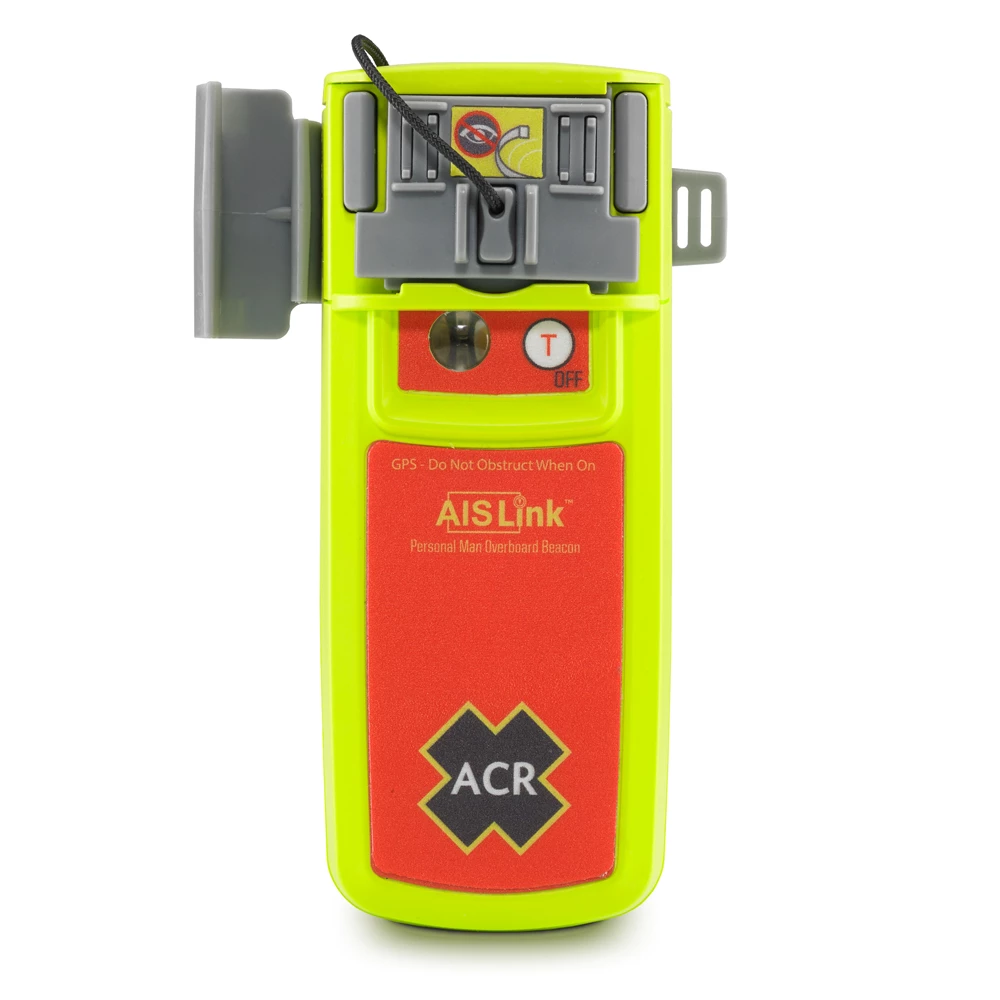
Say someone goes over the side on a passage and isn’t noticed straight away. We lose sight of them. The quickest way for us to get back to them is often the little beacon clipped inside their lifejacket. Most of these are AIS man overboard beacons. AIS is the Automatic Identification System, the same kit that paints other vessels as targets on our chartplotter. When the beacon fires, it puts the casualty on the plotter as a target too, so we can steer straight back to a position rather than hunting by eye.
That’s brilliant, when it’s noticed. And that word, noticed, is the whole reason this is changing.
What changed?
The short version: Ofcom, the UK’s communications regulator, is moving us over to a new standard for these beacons called Class M. Class M comes from a European decision, ECC/DEC/(22)02, and the key thing it adds is a Digital Selective Calling distress alert.
Let’s unpack that. Digital Selective Calling, or DSC, is the automated distress-alert side of a modern VHF radio, the bit behind the little red button under the flap. It sends a digital alert on a dedicated channel, Channel 70, that other DSC radios pick up automatically. A Class M beacon doesn’t only put an AIS target on the plotter. It also sets off that DSC alert, so nearby VHF radios sound an audible alarm.
Older AIS-only beacons don’t do that. They just put a target on the screen and rely on somebody looking at it.
Who does it affect?
This is aimed squarely at recreational sailors, the ones most likely to carry a personal AIS beacon on a lifejacket. Day skippers, coastal skippers, cruising crews, anyone kitting out for the season.
It’s a UK spectrum-licensing change, so it applies to devices used in UK waters and on UK-registered boats. It doesn’t touch your EPIRB or your PLB, which are separate 406 MHz beacons that talk to satellites and the Coastguard. This one is specifically about the AIS man overboard beacons that work boat-to-boat over VHF.
What does it mean in practice?
Think about how a shout for help actually gets seen on a busy day. On older AIS-only kit, the casualty pops up as one more target among many on the plotter. If we’re hand-steering in a lump of sea, or heads-down in the cockpit, or there’s a screen full of ferry and fishing traffic, that quiet new target can slip past us for far too long.
The DSC alert in a Class M beacon is designed to close that gap. Instead of waiting for someone to spot a symbol, it makes the radio shout. An audible alarm on nearby VHF sets are much harder to miss than a silent blip, so the odds of the emergency being spotted straight away go up. There’s a second reason behind the change too. AIS Channels 1 and 2 have been getting crowded with automated gadgets like fishing-gear markers, and a congested channel makes it harder for the genuinely urgent signals to stand out. Tightening the standard is partly about keeping that safety channel clear.
What about the timeline? Ofcom’s proposal would stop authorising new non-Class M beacons after a short phase-out, around three months. Kit already on your licence can keep being used until 2030. After 2030, the only AIS man overboard beacons authorised in UK waters would be Class M ones with DSC. In practice, most of these beacons have a battery life of only a few years, so a lot of legacy kit will naturally age out and get replaced before that date anyway.
However, non-Class M beacons are still widely on sale in the UK. So the real-world risk isn’t your current beacon dying tomorrow. It’s buying the wrong thing this week.
What should we do now?
If we already own an AIS beacon, no need to rush. It keeps working, and it stays authorised for years yet. Check the battery expiry, plan to replace it with a Class M unit when its time comes, and carry on.
If we’re buying, before ordering, check the spec sheet or manual for wording about Class M, or a reference to ECC/DEC/(22)02. That’s the compliance marker. If a listing only mentions AIS and doesn’t say Class M or DSC anywhere, treat that as the old standard and think twice, however tempting the price. Buying Class M now means we’re sorted for the long run rather than replacing the thing again in a couple of years.
What remains uncertain?
The big one: Ofcom has closed its consultation but hasn’t yet published the final decision. The dates and the shape above come from the published proposal, so they could shift a little before they’re confirmed. We’ll keep an eye out for the statement and update this piece when it lands.
There’s also a technical wrinkle. When a Class M beacon sends its DSC alert, that alert can be acknowledged and cancelled by a Class A DSC radio or a coast station, the sort of GMDSS-grade kit carried by commercial ships, not the Class D radios most of us have. If that happens the DSC alarm stops, though the AIS target stays live until the beacon is switched off. It’s not a reason to avoid Class M, which is plainly the better standard, but it’s a fair thing to understand rather than gloss over.